
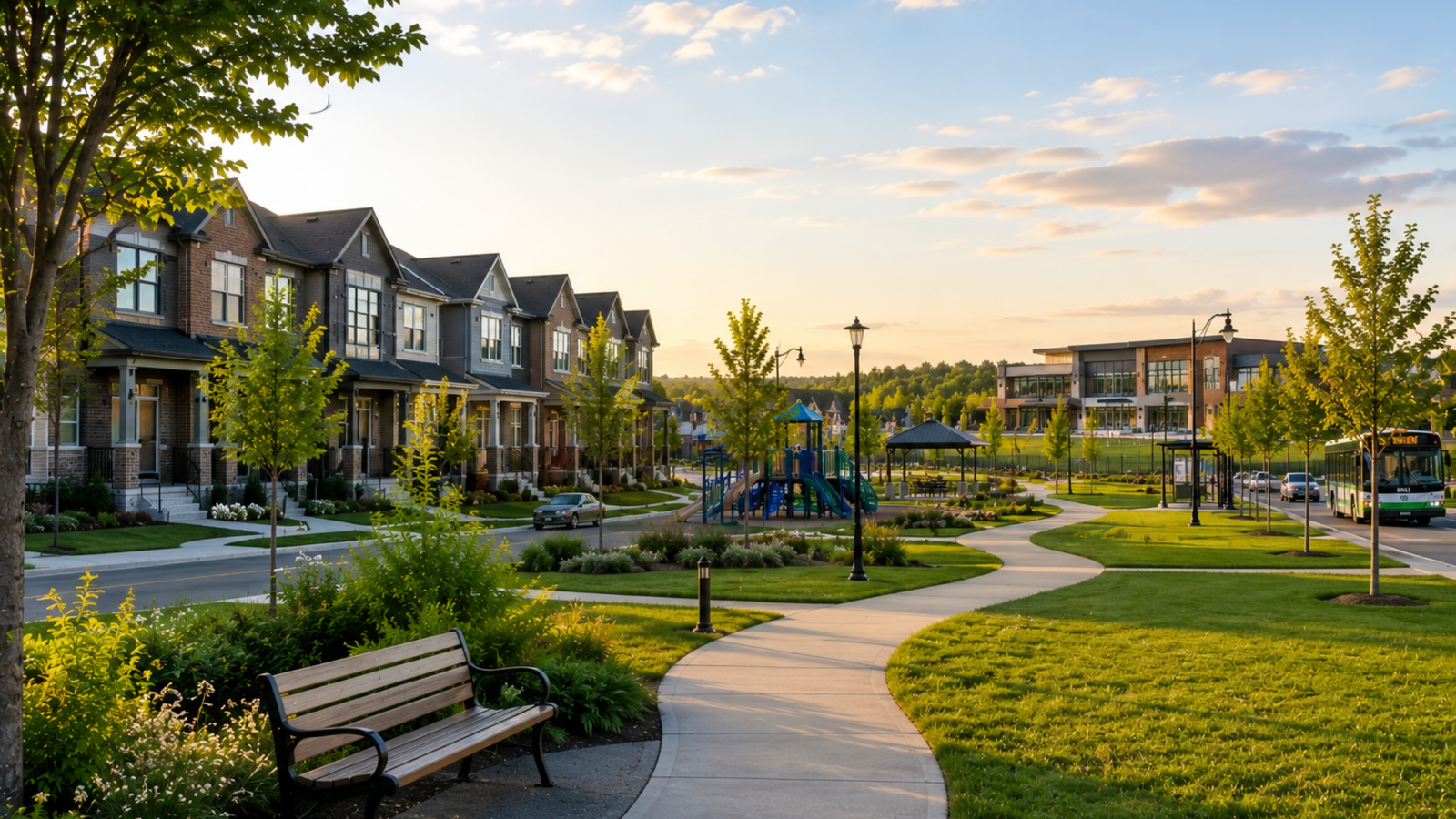
Buying a home is about more than the building. You are also choosing nearby streets, parks, schools, commuting routes, and the overall feeling of the neighbourhood. That is why thoughtful community planning matters.
A well-planned residential community brings homes, services, green spaces, transportation, and everyday conveniences together. It can make routines easier, encourage stronger neighbourhood connections, and help an area remain desirable as it grows. Understanding the Residential Community Benefits of good planning can help you evaluate the complete living experience.
A Home Is Part of a Larger Environment
A beautiful kitchen or spacious bedroom may capture your attention, but the surrounding environment often shapes your long-term satisfaction.
Your home does not exist separately from the rest of the community. Every day, you interact with nearby roads, sidewalks, shops, schools, parks, transit options, and public spaces. When these elements are planned carefully, they work together rather than causing inconvenience.
Logical road connections, pedestrian-friendly routes, and nearby amenities can reduce the effort required for groceries, recreation, school activities, and essential services.
Planning Around Everyday Needs
Good community planning considers how people actually live. It looks beyond the placement of homes and asks practical questions.
Can residents move safely through the neighbourhood? Are parks and trails easy to reach? Are schools, healthcare services, shopping areas, and transportation options reasonably accessible? Does the community support quiet residential living while remaining connected to the wider region?
Useful planning features often include:
- Connected streets
- Sidewalks, trails, and bike routes
- Green spaces for recreation
- Access to schools, shops, and healthcare
- Convenient routes to highways and transit
Together, these features create a community that feels practical, comfortable, and easy to navigate.
Green Space Adds More Than Beauty
Parks, trails, trees, and open spaces can make a neighbourhood attractive, but their value goes beyond appearance.
Accessible green space gives you places to walk, exercise, spend time with family, or take a break outdoors without travelling elsewhere.
These spaces can also become natural meeting points. Children gather at playgrounds, neighbours cross paths on walking routes, and families use shared outdoor areas. These small interactions help turn a collection of houses into a connected neighbourhood.
Buyers also consider the lifestyle available around a home. Maintained parks and natural areas can therefore strengthen a location’s long-term appeal.
Connectivity Protects Your Time
One of the strongest Residential Community Benefits is easier access to the places you need to reach regularly.
Efficient connections to major roads, transit, employment areas, and nearby towns give residents more flexibility for school runs, appointments, shopping, family visits, and weekend plans.
Poorly connected communities may appear peaceful at first, but limited routes can create frustration as the population grows. Thoughtful planning gives residents practical ways to reach important destinations.
WestHaven at Country Lane is located in North Whitby near Taunton Road and Country Lane. The community offers access to Highway 412, connections to Highways 407 and 401, nearby transit, parks, trails, schools, shopping, and healthcare services. These features show how location and infrastructure can complement the homes themselves.
Schools and Services Support Changing Needs
When buying a new home, look beyond the layout and finishes. Check the neighbourhood, nearby amenities, future development, and the builder’s track record.
In Ontario, new-home builders must be licensed by the Home Construction Regulatory Authority. The HCRA’s Expectations for Your Builder explains what buyers should expect, while the Ontario Builder Directory lets you verify licensing, building history, and regulatory actions.
A well-planned community matters, but choosing a licensed and reputable builder is just as important.
Your priorities can change over time. A young couple may value commuting and shopping, while a growing family may later prioritise schools, parks, and healthcare.
A well-planned community can support several stages of life by bringing different needs within reach. This flexibility matters because moving every time your circumstances change is not always practical.
When schools, shops, healthcare, and recreation are part of the broader area, your home can continue to work for you for longer. That stability can strengthen your connection to the neighbourhood and its appeal to future buyers.
Planning for Growth Protects Liveability
Successful communities rarely remain unchanged. New residents arrive, businesses expand, traffic patterns shift, and demand for public services increases.
Planning for growth means considering these pressures before they become major problems. Roads, transit, schools, parks, and services need to support both current residents and future population growth.
Homebuyers should consider whether a neighbourhood is part of a broader plan. A home may suit your needs today, but its long-term liveability depends partly on how well the surrounding area manages development.
Signs of thoughtful planning include:
- A balance between homes and amenities
- Protected or integrated natural spaces
- Transportation links for regional access
- Space for schools and community services
- Infrastructure capable of supporting growth
These elements help an area adapt while retaining the qualities that attracted homeowners in the first place.
Community Planning and Property Appeal
No one can guarantee how a property’s value will change. However, the quality of the surrounding community can influence how consistently a location attracts interest.
Homes in convenient, connected, and well-maintained areas may appeal to a wider range of buyers. A future purchaser may appreciate the same features that matter to you today: manageable travel times, nearby schools, green space, shopping, and everyday comfort.
This is where Residential Community Benefits become part of a long-term ownership decision. You are not only buying square footage. You are investing in access, surroundings, convenience, and the way the area is expected to function over time.
Look Beyond the Front Door
When comparing homes, it is easy to focus on finishes, layouts, storage, and parking. These details matter, but they should be considered alongside the larger community plan.
Explore the area at different times of day. Look at traffic flow, walking routes, nearby services, green spaces, transit access, and planned development. Think about what your routine may look like now and several years from today.
A thoughtfully planned community can make your home easier to enjoy, support changing household needs, and preserve the neighbourhood’s appeal as the area develops. It also gives you greater confidence that the wider setting can continue supporting your lifestyle well beyond the day you move in.
For homebuyers considering Whitby, explore WestHaven at Country Lane Whitby to see how new townhomes, connectivity, green spaces, and nearby amenities come together within the wider community.